
Understanding the Final Missing Piece in Bitcoin’s Elliott Wave Structure
One of the most misunderstood concepts in Elliott Wave Theory is wave extension—and more specifically, how extensions change the way we count waves.
Many investors are familiar with the idea that a market trend unfolds in a five-wave structure.
However, when a wave extends, the structure does not simply stop at five visible moves. It expands. And when that happens, nine distinct waves must be present for the structure to be complete.
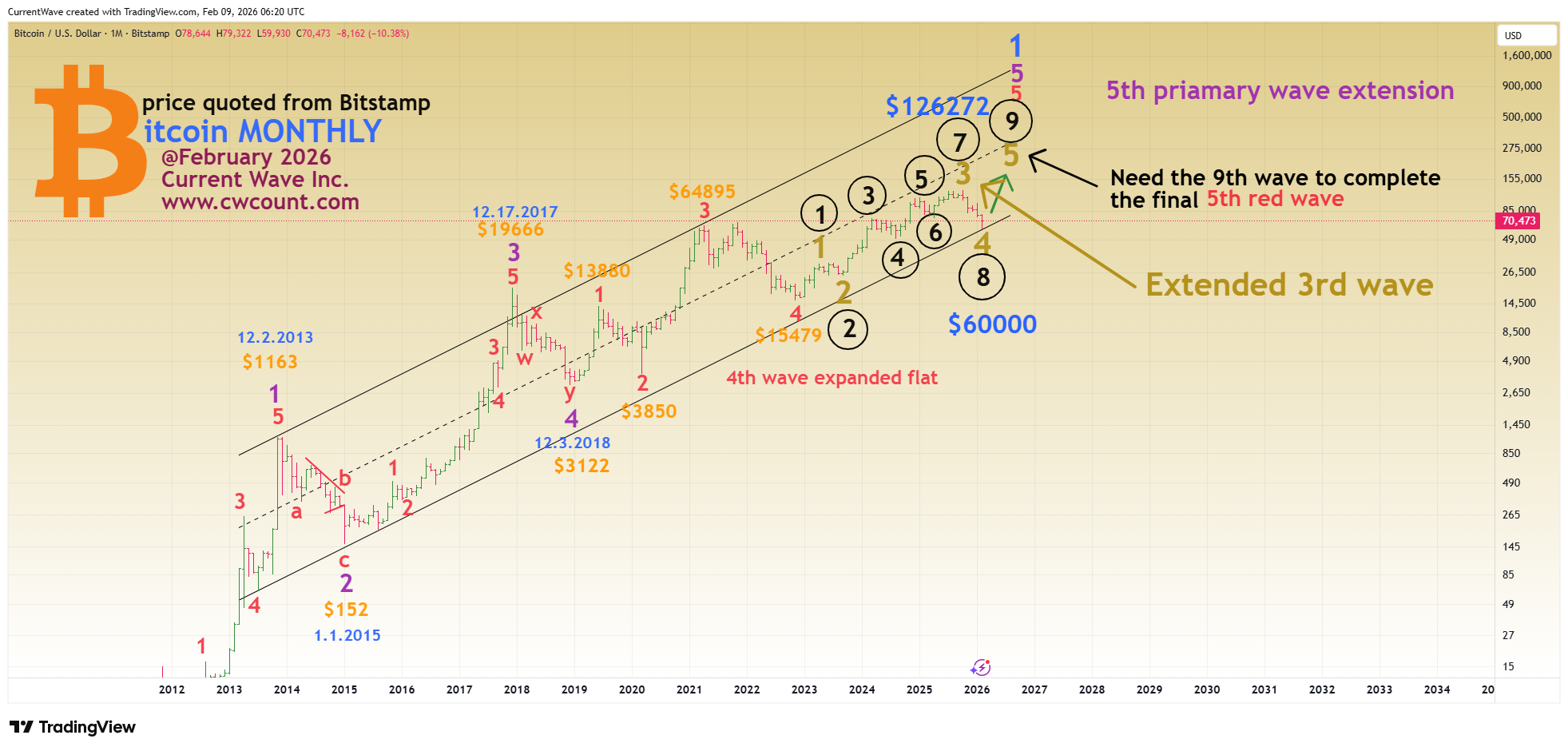 The current Bitcoin monthly chart provides a textbook example of this principle in action.
The Key Concept: Extension Changes the Count
In a standard impulse:
We expect 5 waves (1–2–3–4–5).
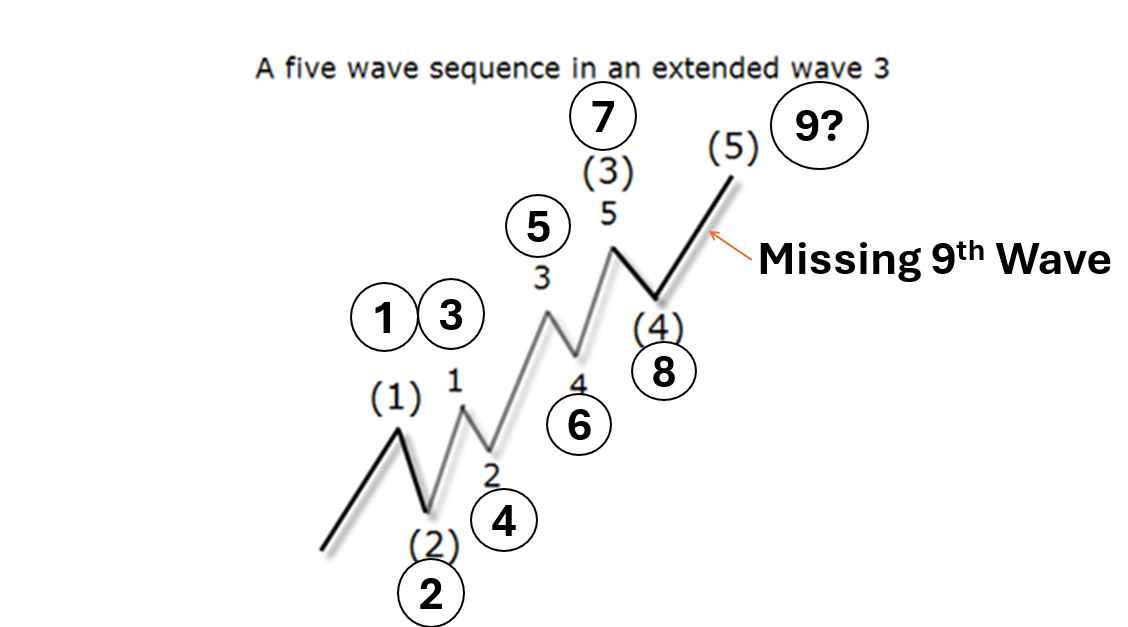
But in an extended wave, especially an extended third wave, the internal structure expands into: Five smaller waves inside the extended wave.
Which results in a total of 9 identifiable waves when viewed in sequence. This is not an interpretation. This is a structural requirement within Elliott Wave Theory. An extended wave must subdivide into its own five-wave sequence, added on top of the original structure.
Frequently Asked Questions
Q. Why do extended Elliott Waves require nine waves instead of five?
A. Because an extended wave must subdivide into its own five-wave structure on top of the original impulse sequence.
Q. Does every Elliott Wave structure contain nine waves?
A. No. Only when a wave extends does the internal structure expand beyond the standard five-wave count.
Q. Is the nine-wave count subjective?
A. No. It is a structural requirement within Elliott Wave Theory, not an interpretation.